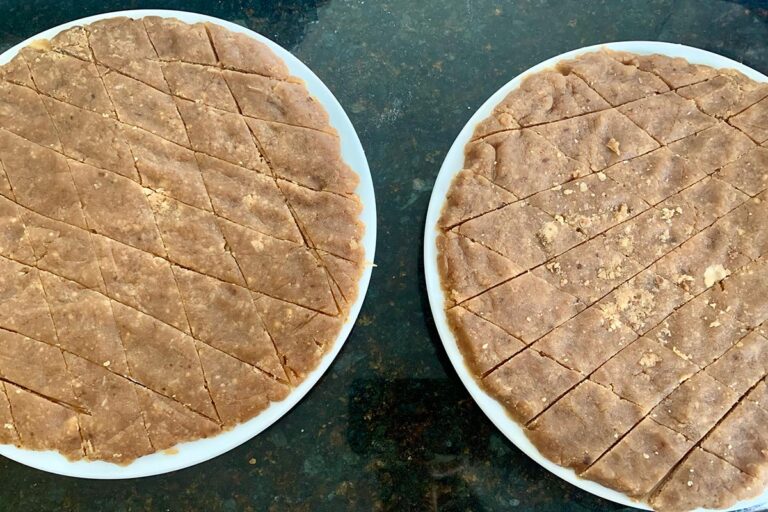
Gnocchi make a substantial, comforting main dish, like pasta. Often I serve these light gnocchi, based on semolina rather than potatoes, with a good tomato sauce. All I need then is a big mixed salad, and dinner’s ready.
Other times, I make a lighter sage-and-butter dressing and serve one per person as an appetizer. Or again, one or two per person to accompany fish, or a vegetable stew.
This version of gnocchi is easy to make. It’s handy when you need a good meal prepared ahead, too. Just cover the gnocchi in their baking pan with plastic wrap and refrigerate. They will keep overnight or for a day. Then pop them into a hot oven for 15 minutes – you can set the table or make a salad in the meantime.
Semolina Gnocchi
serves 6
printable version here
Ingredients:
6 cups milk
3 cups semolina
1 tsp. salt
1/4 tsp. pepper
1 tablespoon thinly-chopped chives
1/4 teaspoon nutmeg, if liked – this ingredient included because traditional recipes call for it. I prefer a little thyme.
3 egg yolks
3 tablespoons butter
1/2 cup grated parmesan cheese, and another 1/4 cup for later
Method:
1. In a large pan, bring the milk, salt, pepper, nutmeg and chives to a simmer.
2. Pour the semolina in a thin, steady stream, stirring the while to avoid clumping.
3. Keep the flame low and cook for 15 minutes, stirring always, till the mass is thick enough for a spoon to stand up in.
4. Remove from the heat. Stir in the egg yolks, 3 tablespoons of butter, and 1/2 cup of parmesan.
5. Mix everything energetically.
6. Spread the dough 1 inch thick on a floured cutting board or a counter-top.
7. When it’s cool, cut into circles with a biscuit cutter or a the rim of a glass.
8. Butter a baking dish, or put baking paper in it. Put the gnocchi in, overlapping.
9. Melt 3 tablespoons of butter; pour it over the top of the gnocchi. Sprinkle the 1/4 cup of grated parmesan over all.
10. Bake at 400° F – 200ºC for 15 minutes.
Serve as it emerges from the oven, golden and aromatic with chives and cheese. Or top it with a sauce. Tomato sauce, pesto, and sage and butter sauce are all excellent instead of that last topping of melted butter. But always sprinkle the grated cheese over it.
*
Here’s the simple and delicious topping:
Sage and Butter Sauce for Pasta, Gnocchi, or Polenta
…or anything else you can dream up.
1/2 cup unsalted butter or ghee.
6 or 7 large sage leaves, chopped fine, or up to 20 small ones
1 shallot or 2 tablespoons onion, either finely chopped
Juice of 1/2 lemon
1/2 tsp salt, or more to taste
pepper to taste
1. Melt the butter but don’t allow it to brown.
2. Add the shallot or onion; fry till it starts to wilt (about 1 minute)
3. Add the sage leaves and stir. Allow them to infuse the butter for 2 minutes.
4. Add lemon juice, salt, and pepper. Taste to adjust seasoning.

Hot-weather recipes. Living in the hot, humid center of Israel, I naturally accumulated a bunch of them. Easy-going chicken recipes; lots of fish; some breads. Desserts that sit lightly. Here’s a roundup of the best, for your hot-weather cooking.
Soup:
Chicken:
Nut/Herb-Crusted Chicken Fillets
Vegetables:
Eggs:
Fish:
Grilled Sea Bass in Spicy Lemon Marinade
Quick Breads:
Desserts:

Café Turkí is taken for granted all through the Israeli day. I’m amused to see a current advertising campaign – billboards showing that little glass of muddy black liquid integrated into the graphics of the words “at work,” “at home,” “on vacation.” It seems superfluous. Nobody needs to be reminded to boil water for Turkish coffee, in any situation.
Sometimes, walking downtown at around 3:00 o’clock, I see the sales girls taking a break in the shop doorways – each one holding a cigarette between her fingers, sipping languidly from a glass of Turkish coffee. Go into any workshop – carpenter, metal worker, printer – and you’ll glimpse that same glass on the desk between the receipts and the phone.
Bank clerks and secretaries automatically offer to bring fellow workers coffee as they jump up to get their own caffeine fix. Visit friends in the late afternoon and most likely they’ll offer you cookies and a cup of that same Turkish coffee.
The comfort of the people. Big shots of course have their own little espresso machines installed in their carpeted offices – but they don’t disdain the little glass of black coffee either, if it’s offered.
Myself, I drink one cup a day, at breakfast, and that with milk, which isn’t traditional but is the way I like it.
Turkish coffee is traditionally made in a finjan – a special pot with a long handle, wider at the bottom so that most of the grounds stay behind when you pour the coffee out. In the Middle East, they’re for sale everywhere. But if you don’t have a finjan, you can make it in any small pot.
It can be coffee from any bean you like. The important thing is that it be finely ground. A coarse grind won’t give you the aroma and flavor of the real thing.
You’ll often smell cardamom in the Turkish coffee as you go past someone’s steaming cup. I’m not fond of it cardamom in coffee myself, but many like it very much. I’m including the spice in the recipe for you to use at your own discretion.
Turkish Coffee
Ingredients:
1 cup cold water
1 heaping teaspoon extra finely ground coffee – experiment with less or more, according to taste
1/8 teaspoon ground cardamom
2 teaspoons sugar
Method:
1. Bring water and sugar to a boil in the pot.
2. Remove from heat and add coffee and cardamom.
3. Return pot to the heat and allow the coffee to come to a boil, while stirring. Remove from the heat when the coffee foams.
4. Pour the coffee into a cup or glass. Drink immediately; the finest aroma is considered to be in the head of froth.


If there’s one thing I can’t resist, it’s a potato. I blame it on my distant Irish ancestors. Or should I lay the blame on the Russian gene in my blood? Anyway, when I hear the siren call of carbohydrates, it’s crooning, “Potato… Potato.”
These roasted wedges are particularly addictive. Crisp-skinned and soft inside, flavored with olive oil and herbs…I defy anyone not to like them.
Adapt the recipe to use whatever herbs you have on hand and like best. This way, though, is how I most often make it.
Golden Herbed Potato Wedges
serves 4-6, depending on size of potatoes
Ingredients:
3 large potatoes, scrubbed but not peeled
Juice of 1 lemon
1 tablespoon lemon zest
1/4 cup water
1/4 cup olive oil
1 teaspoon salt
1/2 teaspoon black pepper
1 tablespoon dried, powdered herbs: one or any mixture of oregano, thyme, rosemary, cumin, paprika
Method:
1. Cut each potato in half lengthwise, then each half into 3 long wedges.
2. Put all the seasonings, the water, and the oil in a large bowl. Blend them well.
3. Toss the potatoes in the herby oil/water mixture.
4. Pour the potatoes and all the liquid into a baking pan. Straighten the potato wedges out so that you have one layer.
5. Bake at 450°F – 225° C for one hour.
Variation: Use juice of only 1/2 lemon and substitute white wine for the water. Make sure to include some paprika in the dried herbs.

It’s only a cold with a cough. The doctor says to rest, take it easy, drink gallons of cough syrup – er, I mean tea, and come back if it gets worse. Which it won’t, because I’m eating this home-made chicken with gravy, and everyone knows that home-made chicken with gravy is a powerful home remedy.
I can live without poultry or meat most of the week, but when I come down sick, I crave chicken. And very fresh vegetables. So I sent the Little One out to the store and she brought me back this great big chicken…a very big chicken.
OK, good. I’ll stew it, I said.
So taking cleaver in hand, I cut away the fat and the feathers (why do they sell chickens with so many feathers on the wings and drumsticks?) and whack! split it in half. The neck I froze for soup later on. Then this is what I did to the bird:
Mimi’s Stewed Chicken
serves 4-6, depending on size of chicken
Ingredients:
1 chicken, halved
Olive oil to cover the bottom of the pan thinly
1/2 cup flour
1 large onion, thickly sliced and the slices halved
4-6 cloves garlic, enough to fill 2 tablespoons
2 tomatoes, good and ripe, chopped coarsely
sprinklings of :
- salt
- pepper
- paprika
- cumin
- za’atar or oregano or basil or rosemary
1 bay leaf
1/4 cup orange juice – stock or plain water work well too.
1 tablespoon soy sauce
1/2 cup red wine
Method:
- Pat flour all over the chicken halves. You don’t have to use all the flour, but make sure the chicken is covered.
- Heat the oil in a large pan. When it’s warm, put the chicken halves in, hollow side down.
- Sprinkle with the salt, pepper, and the dry spices.
- Keep the heat at medium-low. When you hear light crackling sounds, turn the chicken over to brown on the other side. Again, sprinkle with salt, pepper, and the dry spices.
- Allow the chicken to brown again. Turn the halves over after about 5 minutes. Inspect them and if they’re still pale, turn them back to brown some more. Turn the chicken over every so often till all of it is browned – not cooked, just browned. Finish with the halves hollow side up.
- Add the tomatoes, garlic, onion, and bay leaf.
- Add the liquid (I had orange juice, so what the heck, I used that – and it was very good).
- Pour the soy sauce gently over everything.
- Turn the chicken over again so that most of the vegetables fall to the bottom of the pot and the skin side is up.
- Cover the pan, keep the flame low, and turn everything over occasionally to make sure the chicken cooks evenly and the skin side doesn’t burn. There will be more liquid as the vegetables cook; it will bind with the flour and form a sauce.
- Once the chicken is tender all through and the pot is issuing appetizing smells, remove the chicken to a platter and keep it warm.
- Add the red wine to the liquid in the pot, and reduce everything down to half by boiling it down.
- Check for seasoning; add more salt and pepper if needed.
- Replace the chicken in the pot if it has cooled down. When everything’s all hot again, serve, with plenty of the gravy.
I served this with steamed fresh green beans from the shuk. My energy gave out or I would have made rice as well, but…baguettes were good.

And I was thinking, as I dragged a slice of baguette through the delicious gravy, that this chicken deserves a name in French. Chicken à la bonne femme? A la mauvaise femme (are there no bad wives in France)? A la femme malade?
Never mind. It’s homey, it’s just rich enough for comfort, it’s really just good stewed chicken.

Does anybody ever make tea in a teaball anymore?
It’s so old-fashioned and inconvenient.
But I really like it. I have two teaballs: one for a single cup of tea, and one that will take up to 3 teaspoons.
I steep loose tea herbal concoctions like freshly dried chamomile or mallow flowers. Or conventional teas like Earl Grey, so headily fragrant with bergamot. Or Lapsang Souchong, which you can only get loose, at the Wissoztsky store in Tel Aviv, and is very potent. (I once made mead flavored with Lapsang. Don’t ask).
I enjoy packing the teaball and dropping into the cup. Just pour boiling water over it and let it do its work. I even have a tiny teapot-shaped dish meant for placing the wet teaball on, for catching the drips. As you elegantly hand the scones and strawberry jam and Devonshire cream around, of course, while the housemaid, in white apron and frilly cap, brings in the sandwich platter.
Unless you just bring your cuppa with you to the computer and sip at it between sentences.

The herb’s soul rises in a steamy cloud. You taste the herb, pure and simple. Tea brewed in a ceramic pot is ideal, but that’s for company. For myself alone, I use these metal spheres that break in half for you to fill with your tea of choice, and close up again. They allow elusive herbal notes to escape into the hot water – the delicate apple taste of chamomile, the smoky, fermented body of Lapsang Souchong, the green-earth flavor of nettles. Unlike teabags, where the dominant taste is of hot, wet paper.
Today I’m drinking cup after cup of chamomile tea. Caught myself a summer cold, and I find that chamomile, with its anti-spasmodic property, is the right tea for controlling the cough. Ahh, I think as I savor the delicate, flowery brew, lightly sweetened with honey. Why wait till you’re not feeling well?
A good cup of tea should be an everyday treat.


This was a hit with Husband and the Little One at lunch today.
Any firm fish will work with recipe, I think salmon in particular. But Nile Perch is good too, and that’s what I used.
Fish Baked in a Walnut Crust
serves 4
Ingredients:
1 large fish fillet, enough for at least 4 portions
1 large egg, beaten
Juice of 1 lemon
1/2 cup ground walnuts
1/2 cup flour
1/2 teaspoon salt
1/4 teaspoon pepper
1/2 teaspoon paprika
pinches of fresh or dried herbs: thyme, basil, rosemary, a few stalks of lemon grass
a small handful of chives
4 clean, unpeeled garlic cloves
olive oil to drizzle
Method:
Preheat the oven to 350° F, 180° C.
1. If using frozen fish, rinse it and let it sit covered in cold water plus half the lemon juice, for 10 minutes. If using fresh, forgo the lemon water treatment.
2. Put the beaten egg into a large bowl. Swish the fillet around in it, front and back. Make sure all its surface is covered in egg.
3. In another large bowl or large, shallow platter, put the dry ingredients. Mix them up.
4. Lay the fillet on top of the nut mixture, and scooping up more from the sides to pat on top of the fillet. Turn the fillet over. Make sure it’s entirely coated with the dry mixture.
5. Place the fish on a baking tray protected by baking paper. Scatter the herbs and garlic on top.
6. Drizzle olive oil over the whole. Be generous but don’t drown the fish.
7. Cover the fish loosely with tin foil. Bake for 30 minutes.
8. Remove the tin foil and bake another 5 minutes to allow the crust to brown.
Squash the garlic flesh out of the cloves – it will come out of the flat side closest to the root. Put the garlic paste in a small dish and serve to those who like it. You can certainly put more garlic cloves to bake with the fish if you want – just separate them and make sure they get their fair share of olive oil before baking.
This flavorful fish is best served with plain rice and a steamed vegetable.

More fish recipes from Israeli Kitchen:

Truth is, this recipe works fine for Passover too. But while I’m telling the truth – I’m frankly relieved to have done with the endless shopping, cooking, serving, and washing up that was this year’s Passover. The last stray fork is back in its box, we’ve repacked all the dishes and cookware – everything is safely stored away till next year. Now I can put the word “chometz” out of my mind for another 11 months.
And it’s springtime. Spring in central Israel lasts a couple of weeks at the most, but we’re enjoying fresh winds and a prolonged cooler-than-usual feeling. Evenings are chilly. Soup is still a good choice.
I’m a little embarrassed to admit that I made this soup with frozen artichoke hearts. Fresh artichokes have been in season for many weeks, and we have been eating them – but I had this bag of frozens…and a little basketful of mushrooms…and a craving for a simple soup. So I cooked. And it’s good – very good. The faint taste of lemon and a final swirl of butter complement the artichokes perfectly.
Artichoke and Mushroom Soup
Serves 6
Ingredients:
8-12 frozen artichoke hearts (a 400-gram bag)
1 onion, chopped
1 teaspoon salt
1 cup of chopped fresh mushrooms, setting two handsome ones aside for decoration later
3 tablespoons oil
2 garlic cloves, peeled
a pinch of thyme
2 teaspoons lemon juice – or just a hearty squeeze from a cut lemon
1 bay leaf
salt and pepper
2 cups of milk
3 scallion sprigs, chopped
6 teaspoons of butter
Method:
1. Put the oil, the onions, and the salt in a soup pan. Sauté the onions till they’re just wilted.
2. Add the mushrooms, minus the two set aside for later.
3. Add the artichoke hearts. They can go in whole – they’re rock-hard when frozen.
4. Season with salt and pepper; add the bay leaf.
5. Cook everything over medium heat for 10 minutes, stirring.
6. Add water to cover the vegetables, and the lemon juice.
7. Bring to a gentle boil, lower the flame, and simmer the soup for 30 minutes.
8. Test the artichoke hearts for done-ness by piercing one with a knife. If it’s not entirely cooked, give it another 5 minutes.
9. Remove the bay leaf. Add the thyme. Remove one whole artichoke heart and chop it into coarse dice, reserving it for later.
10. Blend the soup. The longer you blend it, the thicker it will become. But it won’t become very thick.
11. Stir the milk in. Cook for 10 minutes and taste for seasoning. Add salt and pepper to taste.
12. Put the chopped, reserved artichoke heart back into the soup. Slice the reserved mushrooms and add them.
13. Cook another 2 or 3 minutes – just long enough to cook the mushrooms through.
14. Swirl a teaspoon of butter into each bowl as you serve. Scatter chopped scallions over each serving.
Close your eyes, inhale that artichokey aroma, and eat the first spoonful. Delicious.


I love fresh garlic. The season is short, just three weeks, and then the purple-streaked bulbs disappear from the market. I rush to buy my yearly 10 kilos, and shlep all that fragrance home in a taxi because I’m afraid that if I get on the bus with it, I’ll have to pretend I don’t notice all the dirty looks from 20 fellow passengers. Even so, the taxi drivers usually open all the windows. Never mind. I’m the one whose whole apartment reeks for a week, until the garlic dries.
So why do I buy all that garlic, and what do I do with it? Well, have a look at the post I wrote about garlic last year. Just about everything I cook has garlic in it. I detest the expensive imported Chinese stuff that goes sprouty a few days after buying it. I like to buy locally grown garlic that lasts ten months. I buy so much because I know there will be some loss – by the seventh or eight month, some will go bad and have to be thrown out. And – fresh new garlic is so delicious.
Follow the link above for ideas on how to eat this seasonal treat. And here’s my panegyric on roasted garlic.
Fresh garlic cloves, being juicy, don’t burn and turn bitter as fast as dried garlic does when you’re frying. This evening we enjoyed simple garlicky potatoes made like this:
A handful of baby potatoes, washed, sliced in half horizontally, and steamed till just tender.
1/2 a red onion, thinly sliced
6 entire cloves of fresh garlic, peeled
Olive oil to cover the bottom of a non-stick frying pan
Salt and pepper
I fried the onion slices over medium heat till wilted, then drained the potatoes, and added them to the pan. When the potatoes began to take on a golden color, I added the whole garlic cloves. Sprinkled salt and pepper over all. Shook the pan once in a while to ensure that the potatoes and the garlic would become golden 0n all sides. The onion became crisp and stringy. When the potatoes were cooked through and had acquired a golden-brown color, the garlic cloves were also done. I served. There were none left to photograph.
On Passover, when it’s one potato, two potato, three potato at almost every meal, that easy but interesting recipe might come in handy.
Late winter is a fine time for mushrooms in Israel. In fact, Israelis are showing a big new interest in cooking with all kinds of mushrooms, so good ones are available most of the year. But even hot house food tastes best when it’s grown in its natural season. Soon the weather will become hot and dry again, so this is the time to snatch up the best of those succulent fungi.
I saw these attractive champignon mushrooms in the shuk last week.

Selecting the firmest, one by one, I half-filled a bag. Clutching it to me and dreaming out the window on the bus home, I thought of mushroom soup and a leek/mushroom quiche. Possibly gnocchi with mushroom sauce. But I knew I’d still have mushrooms left over. Well, there’s duxelles, a way of preserving mushrooms as an essence so you have that unique flavor at hand any time.
It’s an ancient method. The only hi-tech improvement is using a food processor to chop the raw mushrooms if you don’t feel like hand chopping.
Duxelles
Ingredients:
500 grams – 1/2 lb. mushrooms, champignon or portobellos (white or brown). Rinse and wipe them dry. Make sure there’s no dirt on them.

2 Tbsp. unsalted butter
3 Tbsp. finely chopped shallot
1/2 tsp. salt
1/4 teaspoon pepper
1/2 tsp. dried thyme, sage, or crushed rosemary
1/4 cup dry white wine
Method:
1. Chop the mushrooms into fine dice. Or use your food processor.

2. Place mushrooms into a clean kitchen towel, one you don’t mind getting stained. Fold the towel to contain the mushrooms.
3. Wring out the mushrooms over a bowl. Squeeze out as much liquid as you can. Refrigerate and save the juice for soup or gravy.

4. Melt 1 tablespoon of the butter gently.
5. Add mushrooms, shallots, salt, pepper, and thyme.6. Sauté until mushrooms are dry and the aroma is intense. This should take no more than 5 minutes.
7. Stir in and melt the second tablespoon of butter.
8. Add the wine. Stir until it has evaporated.
10. Remove duxelles from heat and cool.
The duxelles are ready to use right away. To store for future use, pat the paste into a strip of tin foil, roll it closed, and freeze. Just cut off tablespoon-sized portions when you need them.

So how do you use duxelles?
- Spread a thin layer of duxelles on toast that’s been lightly rubbed with a garlic clove. Now you have bruschetta.
- Flavor any soup with a tablespoon or two.
- Start an omelet by melting some duxelles in your frying pan, then pouring the eggs over them.
- Spoon some over steamed vegetables or baked potatoes.
- Stir some into your next polenta. Or use duxelles as the topping for polenta (or pasta) instead of sauce.
- Make a mushroom butter: beat butter till its soft; add duxelles and taste to adjust salt & pepper. Delicious with grilled fish.
- Add to any sauce, including tomato sauce.
- Steam sweet potatoes; drain well; melt duxelles in a frying pan and roll the cooked sweet potatoes in them till they’re slightly glazed.
You see? Duxelles add body and mushroom flavor to any food.


Follow me on Twitter