The first green wild plants start poking their heads up at about this time of year. Our rains have been sparse, but that moisture was enough to release the energy in their seeds. Out foraging and taking pictures, I see clumps of nettles standing in neglected street-side corners, and remember how good they taste cooked with garlic and rice. So I stoop down and quickly gather a handful, ignoring the slight sting. Passersby stare for a moment, then walk on, thinking who knows what. Yes, it probably is a strange picture: a middle-aged lady with a camera dangling from her shoulder, picking nettles. I hope someday to be an old lady picking nettles.

It’ll be another month or so till the nettles are big enough to harvest in quantity. Their sting will be powerful then, and I’ll have to be cautious. I’ll go out with a bag and a pair of scissors, cut my nettles close to the ground, and bring them home to dry.

Nettles fit into all kinds of  food. Steamed, sauteed with garlic and/or onions, combined with cheese, mushrooms, as a filling for crepes or ravioli – just recall any recipe calling for dark green leaves, and substitute nettles. Hebalists say ironically that with enough cheese and butter, any wild green is tasty. But the rich, dark taste of nettles stands up to irony (and is good for raising hemoglobin).

And – nettles taste nothing like spinach. It seems that whenever an author is at a loss to describe the taste of a wild green, he or she says it tastes like spinach. Nettles have their own flavor, not earthy like chard, not mild like green beans, nor yet bitter, like spinach – but their aroma sometimes reminds me of wakame seaweed.

Rice With Nettles

Serves 4

Ingredients:

1 cup of rice

1 Tblsp. olive oil

2 garlic cloves

1 tsp. salt

1/2 cup of tender young nettle leaves, rinsed and chopped: a small handful

2 cups of boiling water or hot stock

Method:

1. Rinse your rice well to free it of dust. Allow it to drain in a sieve till no more water drips.

2. Heat the oil in a small pot and add the rice to it. Stir, covering the grains with a film of oil.

3. Allow the rice to heat through and change color slightly. Add the garlic, salt, and nettles. Stir well.

4. All the water or stock- carefully, there will be steam. Stir again and cover the pot.

5. Steam the rice on the lowest possible flame for 10 minutes. Check to make sure all the liquid is absorbed and the grains are tender all through. Let it sit a further 5 minutes before serving. If you like the taste, you might try using a full cup of nettle leaves next time.

It’s not only good, it’s good for you.


To forage for hawthorns, I traveled to Tsfat again last week.

In spring, I’ve picked the pungently sweet white flowers and made wine of them – have eaten the tender new leaves raw. But you have to wait till autumn to pick the little red berries, so like tiny rosehips. Right after Sukkot is the best time to harvest them, but although it was late in the season, there were still plenty when I arrived.

My field guide tells me that there are four varieties of hawthorn in Israel. Some bear big berries, some bear small. Although most have red fruit, one variety’s berries are yellow. The ones I know and from which I’ve made jam, wine, and medicine, are Craetegus azarolus, which grow in the wadi around Tsfat and in the surrounding Meron hills.

There are several entrances to the wadi. I chose this one because just beyond it grow two hawthorn trees I know well.

You have to go through the cow gate. There’s a herd of semi-feral cows that roam the wadi and outskirts of town.They’re peaceful enough, but if they can get into town, they will. Believe me, I’ve almost jumped out of my skin a few times, coming upon them in a dark street.

Just a few meters away stand the hawthorn trees. Their leaves were getting dried out, but the berries were still plump and sweet. Someone had been picking already, I could see, for the lower branches were bare. I think I know who it was.

Not many care about hawthorn berries, but my friend Leah does. We used to go out foraging together. I’m sure she got there before me this time. How can I be so sure? Well, she’s quite short. Although the upper branches were still loaded, all the berries from the lower ones were gone. So it must have been Leah. Or maybe it was the cows: a few fresh cowpats on the ground proved that they’d been visiting.

That wasn’t a problem. What you have to do is pull an upper branch down with one hand and strip the berries off the twigs with the other. Of course, you have to have a third hand to hold the bag you’re going to put the berries into. Lacking that, you hang the bag on a handy branch and get to work.

How lovely the late afternoon was, in the waning light. The birds were already settling down, peacefully twittering their evening signals. A few pine needles underfoot sent up a fresh, sharp smell as I trod them. The familiar trees were there – my heart expanded as I approached them and memories of the time I lived in Tsfat came rushing in. I stood still, breathing deeply. Autumn. I filled my mind with impressions to store up, for the wadi is a little different each time I visit.

So I pulled a branch towards me and started to pick, smiling to think of Leah who had been there before me and wondering if she had thought of me. Every once in a while, I polished the dust off one or two berries and popped them into my mouth.

The berries detach from their stems easily, and if a few leaves go with them, never mind, the leaves are good for you too. They slither through your fingers in a second if you’re not careful, though, and all your straining to hold a branch down will go for nothing. I made myself work slowly, but in twenty minutes my plastic bag was heavy with berries, about three cups full.

Hawthorn’s most important medicinal property is that it is a tonic for heart muscle. Herbalists recommend the tincture or extract of it to people suffering from mild heart disease. Eating the fresh berries works too.

There are other pleasant things about hawthorn. I’ve found it calms down palpitations coming from nerves or a hormonal surge. It restores a feeling of calm after a shock. It’s also helpful to take a dropperful of the tincture if you wake up in the small hours and can’t get back to sleep. In a little while you can return to bed and drop off again.

Most of the berries I picked, I gave to another friend. I have lots of hawthorn tincture from previous years, don’t need to make more. I even have a bottle of hawthorn flower wine that I’ve been keeping. I’ll dry the handful I kept and infuse a few berries into tea every day over the winter. Like all the rose family, they are high in flavinoids and vitamin C – and they taste good. Sweet, with an undertone of sour to balance it, like apples. Hmm…like many things.


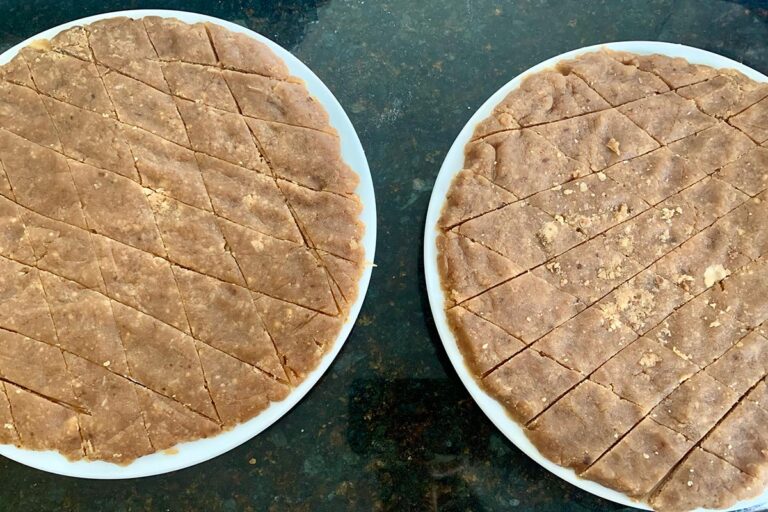
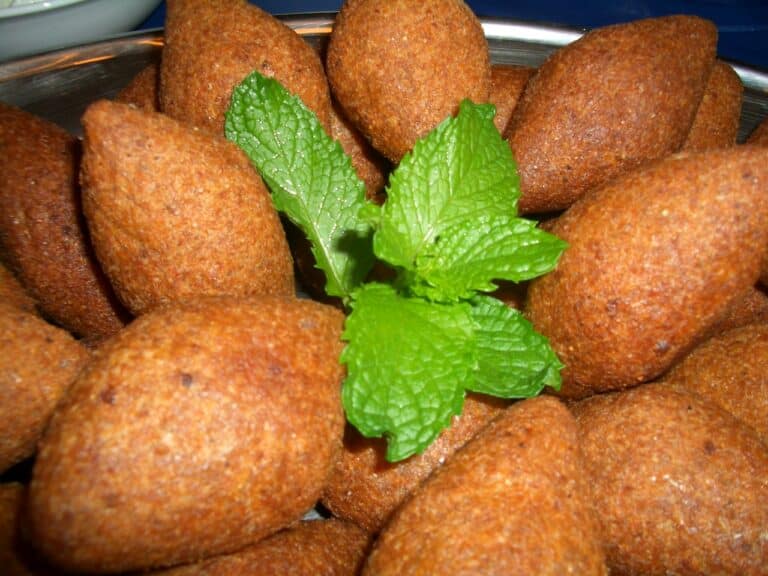
We’ve only just had a taste of winter, making us thirsty for more. In spite of unrelenting blue skies , we hope for a change in the weather that will blow more rain our way. Meantime, the wild herbs have already started sprouting in the fields. The bunch of parsley I was rinsing for Mafroum (see recipe below) had several stalks of Shepherd’s Purse herb tucked away in the middle. I like the slightly peppery taste of Shepherd’s Purse and decided to just strip the leaves and heart-shaped seed pods off the stringy stalks, to chuck into the dish.

Shepherd’s Purse has astringent qualities that are especially valuable in drying up excessive bleeding. I give it, and have taken it myself, right after childbirth, to prevent hemorrhaging. It’s got plenty of nutrition too, but as the peppery taste is strong, I limit its presence in food to just a couple of stalks.


Leda Meredith’s book, Botany, Ballet, and Dinner From Scratch, has some wonderful recipes. One was vinegar flavored with garlic chive flowers. Now I have a handful of chive flowers in my windowsill pot. While I usually just let them go to seed, because I like discovering new little seedlings in unexpected places come next spring, making vinegar from them sounded attractive.

So I took these garlic chive flowers

and did this to them:

and now have this vinegar.

Leda’s book includes recipes for making your own vinegar. You go, Leda!


On a ten-minute walk around the neighborhood today, I counted 23 medicinal or culinary plants. Some were cultivated and some were wild. One, a huge old eucalyptus, is an historic landmark. Others, like the citrus fruit and many varieties of hibiscus, are so common around here that nobody notices them.  Most of our native wild edibles make only a brief appearance in springtime, but here are a few of summer’s favored ones. Click on the pix to enlarge and see details.

Aloes and yellow hibiscus

Aloes soothe and heal burns. Hibiscus leaves and flowers are edible, cooked.

Also known as pigweed. The leaves are edible, cooked; the seeds are high in protein and B-complex vitamins.

Amaranth, or pigweed. The leave are edible cooked, although not tasting of anything much. It is considered “famine food”. The plant is related to quinoa; seeds are high in protein and B-complex vitamins.

Bananas are the main article of diet for millions around the planet. There are many such beautiful banana shrubs around my neighborhood.

Szetchwan, or Chinese Pepper – Pilpelon in Hebrew. The leaves taste citrusy and make a pleasant occasional tea. The pale red berries are a pepper substitute and make up part of the Chinese 5-Spice mix. Medicinal properties: antibacterial, antifungal, diuretic, stimulating. Toxic in large doses, however (sprinkle over food, don’t eat tablespoons of it; drink a cuppa once in a while, not all day long).

Purslane. A valuable free food, known all over Latin America as verdolaga. Can be eaten freely. High in vitamins, minerals, and some Omega-3 fatty acid. Eat the tender young leaves raw in salads or saute them for omeletes (they are salty and somewhat sour); cook the older leaves and stems in soups. The tough stems of autumn make good pickles. Crush the fresh leaves against an insect sting to soothe it away.

There are so many more useful herbs and fruit in the neighborhood, all eminently forageable. Over time I’ll be posting about them.

Mimi

Related Posts with Thumbnails

© 2012 Israeli Kitchen Suffusion theme by Sayontan Sinha