image-fresh-fig-cobbler

I’m  loopy over fresh figs; such a seductive fruit. And I love the fig tree, especially on hot summer nights, when the big, coarse leaves smell deliciously like vanilla and cinnamon. I like its sturdy stance, and the branches so generously laden with green and purple-striped fruit. To open a fig plucked right off the tree and see the mysterious red heart that promises a mouthful of sweetness, well…it’s a moment to cherish and come back to when you need to remember how good life can be.

There’s a great big old fig tree in my neighborhood that I visit once in a while, checking if the hard green little figs have ripened yet. I suspect the neighborhood kids and the birds will get most of them, but maybe I’ll get some too, if I’m alert. Till I can forage my figs, the shuk offers plenty of them. So I brought two kilos home.

Two kilos! That’s a lot of delicate figs. Now I had a kitchen dilemma. Could we eat them up before they spoil?

Figs baked with honey; that was good. Chilled fresh figs with frozen arak poured on top; also good. And before Shabbat, a cobbler, to finish them up. The recipe’s easy and it only takes half an hour to bake. The cobbler is light, just sweet enough, and a little different from the usual peach or apple cobblers.

Fig Cobbler

Ingredients:

1 cup all-purpose flour

1 teaspoon baking powder

1/2 teaspoon salt

2 eggs, beaten

1/2 cup sugar, and another 1/2 cup later

2 tablespoons softened butter or margerine

2 tablespoons milk or orange juice

1/2 cup sweet or semi-sweet wine (I used Emerald Reisling)

3-4 cups figs, sliced into quarters

1/2 teaspoon ground cinnamon

optional: whipped cream

Method:

Preheat the oven to 375° F, 190° C. Use a medium cake pan or quiche dish.

1. Cut the stem end away from the tops of the figs; discard them and quarter the fruit.  Sprinkle the cinnamon over the figs and set aside.

2. Mix the flour, baking powder, and salt.

3. Beat the eggs; add 1/2  cup of sugar. Add the butter or margarine and the milk.

4. To the wet ingredients, add the flour mixture. Stir gently until the ingredients are just combined. Pour the batter into the pan.

5. In a medium saucepan, boil the wine and the second 1/2 cup of sugar for 5 minutes. Add the figs; turn them over in the hot syrup and pour the mixture over the batter.

Bake 30 minutes.

Serve warm or at room temperature, with whipped cream if you wish.

image-fresh-fig-cobbler


home-made-energy-bars


The Little One dashes out to school every morning without breakfast.

“Can you buy me energy bars?” she asked plaintively. “I get so hungry till the 10:00 o’clock break.”

Reminding her that getting out of bed 15 minutes earlier would give her time for breakfast just doesn’t do it. Those precious last minutes in bed…well, I know the feeling.

But I won’t buy commercial energy bars. They’re so full of high-fructose corn syrup and soy flour, it scares me. So I looked at a bunch of online recipes and adapted this one from Serious Eats.

The bars were a hit with the Little One. Husband says they’re good enough for dessert. Yes, with their peanut butter, honey, and dried fruit, they are high in calories. I made them for an active teenager who’s actually losing a little too much weight. I’m happy to hand her one to munch while riding the bus, knowing exactly what’s in her breakfast and that it’s all good for her.

Note: Israelis may use Silan, the runny date honey, instead of bee’s honey or maple syrup. I did.

Best Energy Bars

Ingredients:

1 cup honey, maple syrup, or Silan date honey

2/3 cup natural peanut butter

2 -2/3 cup rolled oats

1 cup whole wheat flour

1/2 cup wheat germ

1 teaspoon ground cinnamon

1/2 cup dried coconut, unsweetened

1/2 cup raisins

1/4 cup sunflower seeds

1/4 cup pumpkin seeds

1/4 cup flax seeds

1/2 cup chopped dried apricots – you may substitute dates, cranberries, or any other dried fruit.

Method:

1. Preheat the oven to 350°F – 180°C.

2. In a large bowl, mix the honey and the peanut butter.

3. In another bowl, mix all the other ingredients very well.

4. Stir the dry ingredients into the honey/peanut butter mixture. Blend everything very well again. You will have a sticky mass. Keep lifting it off the bottom of the bowl and mixing everything up.

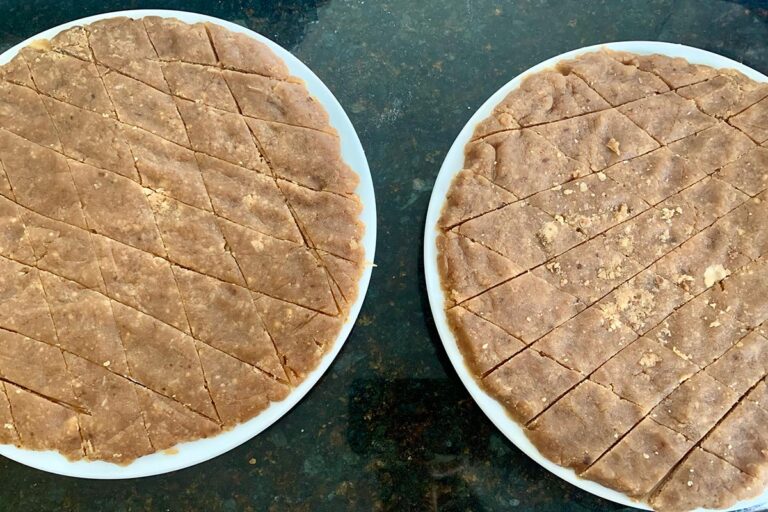
5. Pat the dough into a square cake pan lined with baking paper or one that’s lightly greased. You’ll get sticky fingers unless you oil your hands first. Try to keep the dough even and push it into a square shape. It doesn’t have to reach to the edges of the pan, but keep it square.

6. Bake for 25 minutes. Cut the dough into bars while it’s still warm. However, don’t try lifting any bars out till everything has cooled down completely, or they will crumble. They will be firm when they’re cool.

They’re craggy, but they’re good.

image-energy-bars


sourdough-croissant

Baking croissants seems like such a huge, fussy deal. I always thought I’d take one whole day, prop Julia Child’s recipe up in front of me, and dedicate myself to baking croissants. Someday. But I never had time for that day.

Then I saw this recipe on Richard Packham’s sourdough page. It looked about 50% easier than any other croissant recipe I’d seen – and sourdough, yet. I liked the idea, so I did all the steps one evening, till  step 5, chilling the dough before cutting and rolling it out. It just stayed in the fridge overnight because it was getting late.

Next morning, I could see how well the croissants would turn out, even before they were baked. The dough was  slightly risen, with visible flecks of butter dimpling it throughout.

sourdough-for-croissants

Shaping the crescent-shaped rolls was fun.

They rose flaky and tender, with a melting buttery taste and the slightest sourdough tang. Absolutely delicious. And twelve of them cost only a little more than one bakery croissant.

No more problem baking croissants. The only problem’s going to be refraining from eating them all.

Now I realize that laid out like it is below, the recipe looks hard. It isn’t. Look at it closely and you’ll see that it’s only six steps, with the most energy going into cutting and rolling out dough triangles to roll into crescents. If you start in the evening, like I did, you can do the first four steps in a leisurely way – your fridge will actually be doing most of the work while you’re doing other things around the house or just relaxing. Cutting and rolling the croissants next morning took me about 20 minutes of work. Well, maybe 30, including cleanup. One more hour to let them rise nice and light, then the croissants bake for half an hour (with the oven off the last 10 minutes).

It is a bit of work, but not hard. And all your family will love you, love you, love you.

Sourdough Croissants

makes 12

1. Make the sponge:

1/2 cup starter

2 tablespoons sugar

1/2 cup warm water

3/4 cup bread flour

Mix everything well and allow the sponge to stand, covered and in a warm place, for 3 hours or until it has expanded to 2 cups.

2. Start chilling the butter:

1 cup – 250 grams- cold butter

2 tablespoons flour

2 sheets of waxed paper or baking parchment

Dust one sheet of the paper with 1 tablespoon of flour. Slice the butter into pieces 1/4-inch (2.5 cm.) thick, placing them closely next to each other to form a square. Dust with the second tablespoon of flour.

Place the second sheet of paper on top of the butter and roll it, forcing the butter into a rectangle about 9″ x 9″ (23 cm x 23 cm). Put the butter, between its two sheets, in the fridge for 1 hour.

note: It’s a good idea to follow the dimensions suggested in this recipe, to make 12 even-sized croissants. I actually took a steel ruler and measured everything as I went along.

3. Make the dough:

Into the starter, mix

3 tablespoons sugar

1 teaspoon salt

1/4 cup cold milk

1 cup flour

Knead on a floured surface, adding up to 3/4 cup more flour to get a light, kneadable dough.  The original recipe says up to 1/4 cup more flour, but either that’s a typo or the quality of my Israeli flour is very different, because it took 3/4 cup added flour to get a dough that stayed together.

Cover the dough and chill it in the fridge for 1/2 hour.

4. Roll the dough and butter together:

Flour your working surface heavily. Keep extra flour handy for rolling at all times from now on.

Place the cold dough on your floured surface and roll it out into a 15″ x 10″ (38 cm. x 25.4 cm) rectangle.

note: use the edge of your ruler, or your hand, to push the dough into the desired dimensions with straight edges. It makes a difference, when you cut the dough into triangles later.

Cut the butter in half. Put one half of the butter across the center one-third of the dough.

Fold one end of the dough over the butter. Place the other half of butter on top of it.

Fold the last third of the dough over the butter. This makes a package of dough-butter-dough-butter-dough. It should be about 10″ x 5″ (25.4 cm. x 12.7 cm.) . Pinch the edges together so that no butter shows. If the dough tears, exposing the butter, pinch a tiny piece off the dough and smooth it on over the tear.

Roll out the dough into a rectangle 10″ x 5″. (25.4 cm. x 38 cm.) Chill it in the fridge for at least an hour.

After the hour, repeat the last step, not adding any more butter, just rolling it out to 10″ x 15″ (25.4 cm. x 38 cm.), folding into thirds, rolling it out, and folding again. Chill the dough another hour. Or, as I did, wrap the dough up in plastic wrap and let it rest overnight in the fridge.

5. Shape the croissants:

Line two shallow baking pans with baking paper and grease the paper lightly by rubbing a stick of butter over it.

Flour your work surface again and cut the dough into six 5″ x 5″ (12.7 cm. x 12. 7) squares. Cut each square diagonally to make 12 triangles 5″ x 5″ x 7″ (12.7 cm x 12.7 cm. x 18 cm). Roll each triangle out to 1/8″ (about 1 cm.) thickness, staring from the longest side to the point.

Starting at the longest side, roll it up tightly. Turn it so that the point is underneath the roll. Bend both ends to make them curl towards the middle, making a crescent. Place the croissants on the baking pans and let them rise in a warm place for 1 hour.

6. Bake! Glaze the croissants with an egg beaten with 1 tablespoon of milk and 1 tablespoon sugar.

Preheat the oven to 375° F- 190°C. Bake the croissants for 20 minutes, then turn the oven off and let them sit in there for another 10 minutes before removing them. They should be golden-brown, with a gently crisp crust and a tender crumb.

Fetch the jam, Ma, I’m going to eat.

sourdough-croissants

onion-za'atar twists

Onion-za’atar bread twists with a surprise filling are a good pre-Passover treat.

How is it I still have so much flour? I’d better find ways to use it up before Passover.  There are only three weeks.

I guess the Purim Panic got to me. I baked ma’amoul pastries, the ugly and delicious Prune and Chocolate loaf, Onion Za’atar Twists, and peanut butter cookies with cranberries (recipes follow). Challot for this Shabbat will use up a kilo of flour. But I still have too much flour in the house.

Here are some other ideas:

  • Kreplach. Making pasta at home uses up a lot of flour, including the flour you use to dust surfaces. And if you have kreplach, you have to have soup. There’s dinner for you.
  • Weekday bread for sandwiches and toasting.
  • Pancakes or blintzes for dinner.
  • Refresh the sourdough! That uses up 1/2 cup of flour right there. Not to mention if you decide to bake.
  • Muffins for kids to take to school.
  • Cake and cookies for Shabbat.
  • Quiche. With soup or a salad on the side, you’ve got a meal.

I know I’ll run out of flour before getting to everything there. Good.

Meantime, let me show you the…

Onion-Za’atar Twists.

Yield: 10 roll-sized twists

Ingredients:

1-1/4 cup warm water

1 tablespoon dried yeast or 1 cube fresh yeast

2 tablespoons sugar

3- 1/2 cups all purpose flour

2 teaspoons salt

more flour for dusting

2 large onions

2 tablespoons olive oil

1 teaspoon salt

pepper

more olive oil for drizzling

1 tablespoon za’atar spice – you may substitute2 tablespoons plain sesame seeds or a mixture of sesame seeds and oregano

Method:

1. Chop the onions coarsely. Fry them in the 2 tablespoons of olive oil over medium heat till they are golden – about 10 minutes. Season them with salt and pepper.

2. Dissolve the yeast in the warm water.

3. Add sugar, flour, and salt to the yeast water. Mix well.

4. Knead briefly to obtain a smooth dough.

5. Cover the dough and set aside to rise for 1 hour.

6. Divide the dough into 10 pieces. Leave them on a floured surface.

7. Choose a piece of dough and roll it out into a fat rectangle.

8. Lay a tablespoon of  seasoned sautéed onions along one of the long sides of the rectangle.

9. Roll it up twice and pinch the seam shut.

10. Make a loop and tuck the ends of the “snake” through it to make a twist.

11.  Do the same with the remaining pieces of dough.

12. Cover and let them rise for 1/2 hour. Preheat the oven to 375 °F – 200°C.

13. Just before putting them in the oven, brush olive oil over each one and sprinkle with za’atar.


14. Bake the twists for 25 minutes or until they are golden brown.

These savory little breads are cool because you don’t see the filling until you bite into one and then – oh my onion goodness.


Other flour-using ideas on Israeli Kitchen (most using corn, another item many of us need to use up before Passover):


prune and chocolate bread for Purim

Folks, this is  seriously ugly bread.

On the other hand, it’s delicious.

Dangerously, decadently delicious.

Having an entire loaf of this around is like having brought a full bag of pastries home from the bakery.

I’d always wondered about prunes and chocolate together. I once bought a cake based on the combination. It was heavy as a lead bomb and I threw it out. But the photograph in Bread, by Eric Treuille and Ursula Ferrigno, was so interesting that I said, What the heck, and baked it.

Oh, my.

Chocolate sweetness and and sweet/tart prune, held together in a sweet dough. Rich – did I say this is rich? And it’s not light. But not cloying at all. And so what if it’s, er, beauty-challenged? Some faces grow on you.

If you still have time to bake for Purim, try this. Cut thick slices, wrap each one up, and put them in your Purim baskets.

Prune and Chocolate Bread

Recipe taken from Bread by Eric Treuille and Ursula Ferrigno

Printable version here

Ingredients:

1/2 cube fresh yeast – 4.5 teaspoons dry active yeast

1-1/2 cups – 12 fl. oz. water

4 1/2 cups  white flour

1-1/2 teaspoon salt

5 tablespoons-  1 oz. margarine or unsalted butter

2 cups -7 oz. -  pitted prunes, chopped

2 cups -  7 oz. chocolate, chopped (I used chocolate chips)

1 beaten egg

Method:

1. Put the yeast in a small bowl and dissolve it with 1/2 cup of the water.

2. Put the flour and salt in a large bowl and mix.

3. Make a well in the flour/salt and pour the yeast water into it.

4. Mix the flour in, adding more water as needed to make a soft dough. It should be sticky.

5. Knead the dough till all the flour and water are incorporated, 5-10 minutes.

6. Put the dough into a floured bowl. Cover it and let it rise for 1 hour or until doubled.

7. Preheat the oven to 350°F – 180° C.

8. Push the risen dough down and knead it a few times. Cover it again and leave it alone for 10 minutes.

9. Add the prunes, chocolate, margarine or butter and the egg. Squish everything in with your hands, it works much better than trying to beat the dough with a spoon.

10. Lightly flour your work surface and knead the dough just a minute or two, till it can hold a shape.

Now you get to decide if you prefer one large round loaf to slice, or 8-10 buns. In the latter case, tear off lumps, shape them roughly, and bake them only 25-30 minutes.

11. Cover the loaf (or buns) and let it rise 30 minutes or until it’s light.

12. Bake for 45 minutes. Cool on a wire rack.

Note: the recipe calls for baking this in a greased 1 kg loaf pan, but I saw that the dough was too big to fit into mine. So I baked it as a boule. Less convenient to slice, but somehow impressive.

Don’t you just love that little punim?

Sambusak are savory turnovers filled with chickpeas, ground meat, cheese, or potatoes . They’re good as appetizers or to pack into a lunch box, or to have on hand frozen when guests are coming and you need something to offer, in a hurry.

I like this spicy chickpea filling. But it’s easy to vary the filling with cheese and scallions, or ground beef or mashed potatoes mixed with the spiced, fried onion mixture detailed below.

You can either fry or bake sambusak. While it’s healthier to bake them, there’s something about a fried sambusak…particularly a deep-fried one…like the kind you can pick up in the shuk or at shwarma stands…that’s so good. But then, so many dangerous things are.

I fry these yeast-raised ones  in shallow oil. If you prefer to bake your sambusak, use the second dough recipe, which is unleavened.

Chickpea Sambusak

yield: about 20 pastries

Ingredients for Yeasted Dough:

1/4 oz. dry yeast, or 1 cube fresh yeast

1 teaspoon salt

1 teaspoon baking powder

2 teaspoons sugar

1 cup water

3 cups all-purpose flour

Method:

In a large bowl, dissolve the yeast in the water.

2. Add the salt, baking powder, and sugar. Stir.

3. Add the flour a cup at a time. Mix, then knead till the dough is firm.

4. Cover the bowl and allow the dough to rise for 2 hours.

Ingredients for Simple, Unleavened Dough

3 cups all-purpose flour

2 teaspoons salt

8 ounces unsalted margarine or butter at room temperature

1/2 cup cold water

1 egg, beaten for glazing baked sambuska

sesame seeds for baked sambuska

Method:

1. In a medium bowl, mix the flour with the salt.

2. In a large bowl, beat the margarine or butter till its creamy. Add the flour, mixing well as you go.

3. Add the water and mix well.

4. Knead the dough till a smooth ball forms. Cover the bowl and put it aside. The dough will ferment slightly while you’re busy making the filling.

Ingredients for the Chickpea Filling:

2 cans of chickpeas

2 tablespoons olive oil

2 medium onions, finely chopped

1 teaspoon salt

1 1/2 teaspoon ground cumin

1/4 teaspoon ground ginger

1/2 teaspoon black pepper

1/4 teaspoon ground nutmeg

1/2 teaspoon white pepper – or use 1 teaspoon of either white or black pepper

oil for shallow frying

Method:

1. Put the chickpeas in a strainer. Drain and rinse them.

2. Put them through a food processor till they’re a chunky paste, or blend them.

3. Fry the onions in the olive oil till translucent.

4. Add the dry spices to the onions; stir and cook about 3 minutes.

5. Add the spiced onions to the chickpeas and mix everything up well.

Form the pastries

1. Take pieces out of the dough till you have 20 equal-sized pieces. Pat each piece into a rough circle in the palm of your hand as you work.

2. Flour your work surface and roll each patty into a circle about 3 inches in diameter. Don’t be afraid to roll them out thin, especially with the yeasted dough.

3. Place a tablespoon of stuffing in the middle of each circle. Fold the dough over to make a triangle, hiding the stuffing.

4. Pinch the edges of the sambusak together, or crimp them with a fork, to seal them.

Fry the sambusak in shallow oil over medium heat. Turn them over when the first side is golden, and fry the other side. Drain on paper towels or crumbled newspaper and serve hot.

Or, preheat the oven to 350°F – 180°C.  Lay the sambusak in a baking pan. Glaze the upper sides with beaten egg; sprinkle sesame seeds on top. Bake for 30 minutes or until golden-brown.

Unbaked (or un-fried) sambusak can be frozen in layers, then packed into heavy ziploc bags. Put them straight into hot oil or a preheated oven when you take them out of the freezer, and proceed as above.

An irresistible combination of aromas and flavors: orange and fresh pastry. Inspired by the orange trees in bloom all around the neighborhood, I went searching for a recipe featuring the fruit. I found this recipe at Recipezaar.

I made a few adjustments, using margarine to keep the pastry pareve and changing the glaze’s original ingredients. And can I tell you how delicious these tempting little pastries are?

I’d better not.

I want them all for myself.

Orange Rolls

Makes about 30

Ingredients for Pastry

1 package fresh yeast (1/4 oz.)

1/4  cup warm water

1 cup more warm water or milk

1/4 cup margarine or butter

1/4 cup sugar

1 teaspoon salt

1 egg, lightly beaten

3 1/2 – 4 cups flour

Ingredients for Filling:

1 cup sugar

1/2 cup soft margarine or butter

2 tablespoons grated orange zest

Ingredients for Glaze:

1 cup powdered sugar

4 teaspoons margarine or butter, soft

5 teaspoons orange juice

1/2 teaspoon cinnamon

Method for Pastry:

1. Dissolve the yeast the 1/4-cup of water, in a small bowl.

2. In a large bowl, mix the cup of water or milk, marg or butter, sugar, salt, and egg. Use a mixer for this if you have one; it’s easier and less messy.

3. Stir in the yeast mixture.

4. Add the flour. You should have a soft dough; one you can knead but will still be a little tacky.

5. Knead till smooth – 5 minutes or so. You can knead it in its mixing bowl.

6. Sprinkle flour over the surface of the dough, turn it over, and sprinkle more flour over it. Cover the bowl.

7. Let the dough rise for about an hour or until doubled and light.

8. Punch it down and divide it in half.

9. Roll each half into a 15 x 10″ rectangle (I just judged by eye and made a fat rectangle).

10. Mix the filling ingredients until smooth. Spread half on each rectangle. Spread it thinly and smoothly, covering all the rectangles.

11. Roll each rectangle up, starting from either long edge.

12. Cut each big roll into 15 pieces. It’s a little tricky, but don’t worry if the little rolls pull apart a little. You can quickly re-shape any awkward-looking ones.

13. Place the rolls into baking pans that have either been greased or covered in baking paper. I recommend lining the pan with baking paper, as the filling leaks out a bit in baking, and makes removing the finished rolls difficult.

14. Cover and allow it to rise 45 minutes or till doubled in volume. About 25 minutes into the second rising time, preheat the oven to 375° F -  190°C.

16. Bake  for 20 – 25 minutes. Keep a sharp eye out – they should be a golden brown, not a deep brown. The heavenly smell in the house will announce doneness.

17. Mix the glaze ingredients. It won’t look like there will be enough to glaze all the rolls, but there will be. Spread the glaze generously over the rolls while they’re still hot.

18. Refrain from devouring everything.

Bread and soup, soup and bread…that’s dinner around here on winter nights. Everybody wants a hot meal but nobody wants to bother about it too much. Husband might be relaxing with a book – the Little One giggling on the phone with a friend – and I peering earnestly into the screen, too wound up with some project to start banging pots and pans around in the kitchen. What will we eat? Well, bread and soup.

Which I’d cooked earlier, when energy was running higher and there seemed to be more time. I set a plate with two kinds of cheese next to the bread, and call the hungry ones to the table.

Sourdough Bread with Cornmeal

A mildly sour bread.

yield: 2 loaves

Start this at night to serve the next day.

Ingredients for overnight sponge:

1 cup sourdough starter

2 cups water

3 cups plain white flour

1/1/4 cups corn meal

Rest of Ingredients:

1 tablespoon corn oil

1 teaspoon baking soda

1 tablespoon salt

1/4 cup water

3 cups flour, and maybe more

Method:

1. In a large bowl, mix all the ingredients for the overnight sponge. Knead it a little too incorporate everything if it’s too stiff for the spoon, but the result should be a soft dough, not a firm ball. Drizzle a little oil over it to keep it from forming a skin overnight – smooth it with your hand to make a thin film over the dough. Cover the bowl with plastic wrap and put it away in a cool place overnight.

2. By next morning, the sponge should be light, pocked with bubbles, and have a pleasantly sour smell. Now get a small bowl ready, and measure the remaining 1/4 cup water into it. Add the baking soda and the salt. Mix. Add the oil to the mixture.

3. Pour the water mixture into the sponge and beat it in.

4. Add about 3 cups more of flour, kneading it in. If the dough is too soft to handle, add flour a little more at a time. Stretch it out between your hands and fold it as you would make a paper envelope – then stretch it out and fold again, three or four times more. It may get sticky – just dust a little flour over your hands to keep going. You don’t want a stiff dough, but one just cohesive enough to handle.

5. Shape your loaves, cover them, and let them rise in a warm place 1 1/2 – 2 hours or till they’ve grown light, with noticeable bubbles under the surface skin.

6. Preheat the oven about 20 minutes before you anticipate baking.

7. It’s best to slash the tops before baking, to prevent a cracked crust. So cut some slashes into them and then allow them to recover for 5 minutes.

8. Bake at 350°F, 180°C, for 30 minutes.

9. Inspect the loaves for done-ness. If they seem a bit underbaked, turn them upside down and continue baking for another 5-10 minutes.

This bread tastes best when totally cooled down. That gives the sweet flavors of wheat and corn a chance to come through.

And by the way, it makes fantastic bruschetta.


**********************************************************

5 soup recipes you might like:

Last night, I opened the fridge and there was my sourdough starter, looking sort of reproachful. It had somehow migrated from the back of the fridge to the front, where I could see it and feel guilty about it. C’mon, little guy, I know you’re strong, I thought to it. You’re surviving. You don’t really need me to refresh you every week … do you?

I haven’t quite reached the stage of talking to inanimate objects, although the day is probably not too far off. Thing is, a sourdough starter isn’t inanimate; it’s full of live yeast culture, and I’m supposed to take care of it instead of leaving it in the back of the fridge for weeks at a time.

At least it didn’t think anything back at me.  But it did look neglected. So I shlepped the jar out, mixed the hooch back into the starter and removed a cupful to another bowl.

Once the original starter was refreshed and stored away again, I reached for the cupful to throw it out. But I hate to pour good, live  culture away. So I beat in about 3 cups of all-purpose flour, covered it with plastic wrap, and set it aside while I did more important things, like watching Shrek with my Little One for the eleventeenth time.

A lovely, bubbly sponge developed meantime. Hm.  This had possibilites. So I mixed in a tablespoon of olive oil, a tablespoon of salt, and about 2 more cups of flour. Stretched and folded. Floured the bowl heavily, covered my dough with plastic wrap again, and went to bed.

Funny how one thing leads to another, and how small things can shape your day (or destiny). I had errands to run this morning, but it was raining. Casting around for an excuse to stay home, the sourdough caught my eye. It was well risen, fair and light in its bowl, rich in the promise of good bread. Pretty good for a little cupful of starter I’d almost thrown down the sink last night. Wouldn’t it be a pity to let the dough keep on fermenting the whole morning? It would get too sour to enjoy. Better stay home and bake something wonderful.

So I divided the dough into thirds.

With one third, I made a quick little focaccia. Just olive oil, kosher salt, and plenty of freshly-ground pepper. I let it rise again for half an hour, meantime pre-heating the oven to 450°F and shaping the next two breads.

The focaccia baked up in about 20 minutes.  When it cooled down, I split half of it open and stuffed my breakfast omelette into it. Pretty good, with a tomato.

There were about 3/4 -cup of black olives that needed to get used up. I sliced and kneaded them into the second third of the dough. When I took the focaccia out of the oven, I put the boule to bake – it took 1/2 hour on top, then another 10 minutes upside down.

And there was some firm white cheese (Hemed, for Israelis). And a few tablespoons of grated Parmesan. The last third of dough I rolled into a rectangle, filled with cubed white cheese and the Parmesan, and rolled up into a fat snake. Then, using a technique more commonly used for sweet yeast cakes, I cut the snake almost in half lengthwise, and twisted the two halves around each other. Painted the whole with a little beaten egg I’d set aside before making my omelette, and let the cheese bread rise while the olive bread was baking.

That was some good bread.

And there went my whole morning, just doodling around with sourdough. Well, I did make a fish soup in between. Guess what’s for dinner tonight.

This is the challah I most often bake.  Husband and The Little One favor its just-sweet-enough taste, close crumb, and golden crust. When it’s just the three of us for Shabbat, I bake four big rolls instead of two braided loaves.

Plain Sweet Challah

Ingredients:

1 cup plus 1 Tablespoon warm water

1 cube of yeast

1 large egg

1/2 cup sugar

50 grams – 4 1/2 Tablespoons margarine

4 1/2 cups all-purpose flour

2 teaspoons salt

1 egg for glazing the challah

1/3 cup sesame or poppy seeds for decoration

Method:

1. Put the water, yeast, egg, sugar, margarine,  flour and salt into a large bowl. See step 2 below for the mixing method that will suit you.

2. If mixing by hand, add only 3 cups flour and mix. Then add the salt and beat the mixture fiercely.Then knead in the rest of the flour.

If using a standing mixer, put all the flour in at once. Beat on low for 3 minutes, then add the salt. Beat a further 8 minutes on medium speed.

I use a hand mixer and put in 3 cups of flour, mixing till I have a thin dough. Then I knead in the salt and the remaining 1 1/2 cups flour by hand.

2. Put the dough into a floured or oiled bowl, cover the top with plastic wrap or pop it into a plastic bag, and let it rise till tripled in volume – about an hour.

3. Ease the air out of the dough gently by pressing it onto a floured surface. Sprinkling a little more flour over it, knead gently for a few minutes. Cut the dough into 6 pieces for making two braided loaves (or 4 pieces for large rolls or 2 pieces for two plain-shaped loaves). Shape it as you desire.

4. Once your bread is shaped, place it on your prepared baking sheet and cover it loosely with a cloth. Allow it to rise a further hour and half.

After the first hour of this second rising, pre-heat your oven to 350° F – 180° C.

2. Just before the loaves are ready to bake, beat the egg for glazing and paint the beaten egg onto the raw loaves. Sprinkle seeds all over the loaves.

3. Bake for 30 minutes or until the loaves are golden-brown. Cool on a rack. Refrain from gobbling it all down at once.

*

This past Shabbat I cut crosswise slashes into the rolls and glazed them with no seeds on top. Just for variety. It looked like this:

Related Posts with Thumbnails