open-air-market

It’s a shuk where shoppers must enter through a security gate. The only other shuk I’ve seen with this is Shuk HaCarmel in Tel Aviv.

Shuk Rosh Ha-Ayin is located, of course, in Rosh Ha-Ayin. It’s a town with a large Yemenite population, located in the center of the country and only a short drive from where I live. The open-air market is open on Fridays, and people come from all around the area. I visited there with Baroness Tapuzina one hot Friday not long ago.

Once inside, we saw it’s not a shuk for produce. More for cheap clothes and household goods.

Rosh-Ha'ayin-market

The tentlike structures don’t reveal how big it really is inside. Here are a few glimpses.

inside-shuk-rosh-ha'ayin

I was interested to see the mixture of people buying, side by side. The vendors seemed to be mostly local Yemenites.

shopping-at-Rosh-Ha'ayin

A limited selection of kippot, and a cute kid with long, curly peoht (sidelocks), Yemenite style.

kippot

Can you do the can-can?

stockings

There is always a selection of fantastic shoes in the shuk. Hard to resist these.

shoes-rosh-ha'ayin

And the usual selection Chamsah amulets for blessing and protection against the Evil Eye.

chamsah-amulets

Pay no attention to the woman behind the curtain. She’s simply trying on a blouse.

trying-on-a-blouse

There was a small section devoted to food.  This being the Middle East, there had to be many varieties of olives, each with its unique seasoning.

seasoned-olives

We chatted with this lady, who bakes all kinds of delicious Yemenite breads with her own hands, and sells them there.

shuk-rosh-ha'ayin

There was kubanah, a round, rather sweet loaf. It’s meant to be saturated with clarified butter and left overnight on the hot plate. Most traditional Yemenite breads are loaded with oil, marg, or butter. This is a remnant of their rural past in Yemen, when everyone lived in primitive conditions and labored hard. A generation after the great Yemenite aliyah (immigration to Israel), the incidence of heart attacks in the Yemenite community rose sharply.

I think the biggest killer is probably Jachnun, a heavily fat bread meant to be placed inside the cholent to cook and swell up overnight. It has the typical almost-sweet taste favored by Yemenites in bread.

jachnun

Below from left to right: flat saluf and round kubanah. Above the kubanah, lupine seeds boiled with turmeric, and above those, red and green schug.

kubanah-and-lachuch

Saluf is like a big pita, and lachuch is a flat, floppy, spongy, and delicious bread. No fat in lachuch, luckily.

yemenite-flatbreads

The handwritten cardboard sign advertises  kubanah – lachuch – Lupine seeds – hilbeh (fenugreek relish) – red schug (fiery hot sauce) – green schug -

schug

And samneh (ghee flavored with fenugreek).

samneh

I bought some samneh, curious to taste this flavored, clarified butter. I found the taste of fenugreek put me off. Yemenites hold very strongly by fenugreek, attributing to it the power of increasing virility in men, and fertility in women. I guess the Ashkenazi in me rebelled. I like Hawaij spice for chicken soup, enjoy the fire in Yemenite cooking…but fenugreek, I can do without.

I liked the sign above the bread stand, though.

shuk-rosh-ha'ayin

This Malabi vendor let me take a photo before I gulped the thick, smooth white pudding down.

malabi

It was getting late. We needed to return home and cook our Shabbat meals.

On our way out, we saw a Chabad hassid perched on top of a car, expounding on the week’s Torah portion in the hot sun. He was admirably learned and earnest.

chabad

What I loved, apart from him himself, was that when he paused to shlook down some water, everyone – men with kippot or without, women in modest long skirts or in shorts – everyone shouted “Amen!” to the blessing he said over his drink.

We ate lachuch instead of challah for our Shabbat night meal.

lachuch-Yemenite-bread


olive stand at Mahaneh Yehudah market

Last Friday Baroness Tapuzina, Sarah Melamed, and I drove up to Mahaneh Yehudah, Jerusalem’s open-air market. It seemed like half  Jerusalem was out shopping, loading up on the week’s best and freshest food before Shabbat.

We arrived at around 10:00 a.m, strolling from stand to stand, drinking etrog juice here, taking photos there. Something new: fresh green chickpeas, roasted and salted.

roasted fresh green chickpeas

I bought a bagful for all of 5 shekels. We three snacked on the oily, salted chickpeas as we wound in and out of the tight little streets. Notice the huge bag of green almonds hanging behind the vendor’s head.

By 2:00 p.m.,  the multitudes streamed up and down the alleys, and nobody allowed you to just stand and chat in the middle of the shuk. You’d get a good-natured scolding for blocking the way.

“Lady, move!”

Mahaneh Yehudah

You just have to take it in good part. And move on.

Here’s a still life with fish:

still life with fish at shuk Mahane Yehudah

Although this little guy seemed ready to cuss everyone out. Hm. One or two disgruntled folk in the shuk had the exact same look on their faces.

fish head at shuk Mahaneh Yehudah

One of the fun things about going someplace with friends is that each sees different things. It struck me, as never before, how preoccupied people are with avoiding the Evil Eye – ayin ha-ra.

Our old green-eyed friend, Jealousy.

Is my produce more attractive than yours? Do I have more customers? Tfu, tfu, tfu – let’s spit three times.

Or decorate my garage door with chamsah handprints.

handprints against the Evil Eye

Or place a rue plant on the right-hand side of the stand. That’s a sure-fire Evil Eye deterrent. People will often put a potted rue plant on the right of their doorstep, or plant one in the entrance yard. I did that myself once, just to fit in with the atmosphere, when I lived in Tsfat.

Rue against the Evil Eye

Afraid someone’s going to cast a jealous look at your beautiful infant? No problem: just slip an anti-ayin ha-ra bracelet over her little wrist. Or over your own, if you’re really worried.

bracelets against the evil eye

So many contrasts, so many different kinds of people.

Over to one side, a Breslaver Hassid busked for coins.

Breslav hassid in shukHe did have a manic look about him – but it can’t be easy, singing “Na-Nach-Nachman-mi-Uman” to the indifferent crowds at Mahaneh Yehudah.

A more peaceful man was this vendor. He specializes in home-made ambah, choumous, and all kinds of pickles. I tried one of his pickled carrots – whew! It was fiery with those demonic tiny red shatach chilis.

the ambah and pickles vendor at Mahaneh Yehudah

We were starting to get hungry, and eyed the sidewalk restaurants with a view to lunch. Should we go for one of the sophisticated new cafés, the ones with a deliberately European feel?

European style cafe in shuk Mahaneh Yehudah

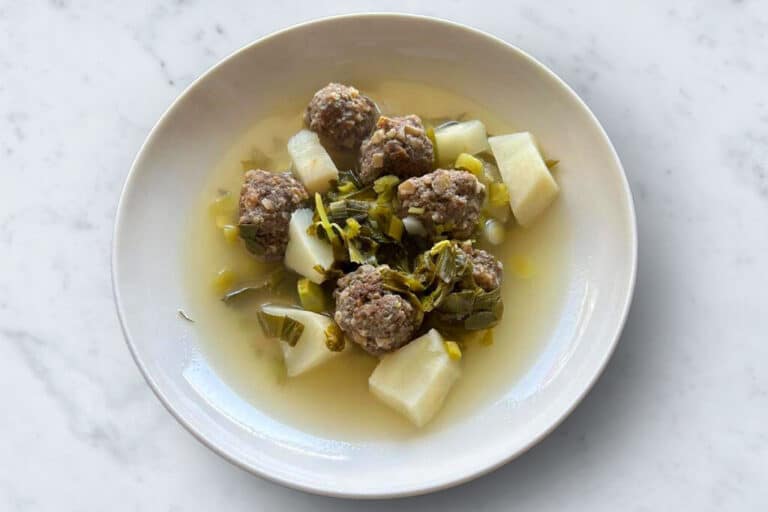
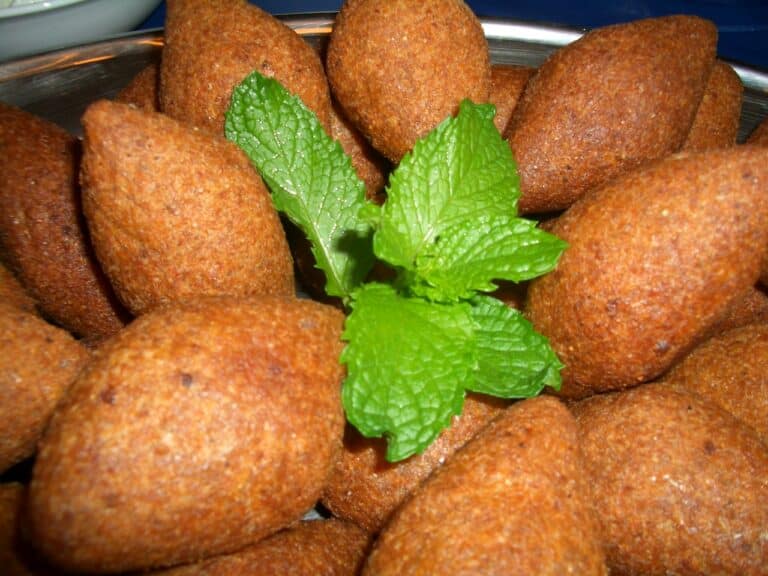
No, we were far more attracted to the funky places that cooked old-fashioned dishes like majadra over gas burners. Some of those tin pots over gas burners produce sumptuous meals, too. Kubbeh dumplings in rich soup, meat sofrito, and the most luscious hand-made choumous…

old-fashioned cooking at Mahaneh Yehudah

Here someone chooses Shabbat take-away.

choosing Shabbat takeaway at Mahaneh Yehudah

Eventually we squeezed into the Azura restaurant, sitting almost elbow to elbow with other diners. This post has gone on for a long time, so I won’t describe what we ate (maybe in another post) – but here’s something to put in your eye – creamy choumous, crowned with chickpeas and parsley, and anointed with olive oil.

humus at Mahaneh Yehudah market

It was really, really good.


Everybody stops by the shuk sometime or another. Israel’s three most famous open-air markets are Machaneh Yehudah, in downtown Jerusalem, the Arab shuk in Jerusalem’s Old City, and the Carmel Market of Tel Aviv.  Other large towns also have permanent shuks of their own. Smaller towns are served by traveling markets that arrive once a week and set up in a designated place; in a later entry I will show you the shuk that covers the north of the country and stops in Safed on Wednesdays.

Continue reading »

Related Posts with Thumbnails

© 2012 Israeli Kitchen Suffusion theme by Sayontan Sinha