Shmaltz is something I make only once or twice a year, although it was the fat of choice for my Russian Ashkenazi ancestors. In the freezing winters of the Ukraine, they needed a layer of fat to keep warm. On the other hand, people were far more active physically than most of us today. They worked the calories off chopping wood for the stove, drawing well water, making and repairing everything by hand, and walking everywhere.
Every scrap of fat was precious, and not just for eating. My father told me his great-grandmother would skim all cooking fat off, keep it frozen outside all winter, and make soap from it come spring.
Goose or chicken shmaltz was also a home remedy for pneumonia. Rendered down with plenty of onions and allowed to cool, it was massaged into the chest and back of the sick one, who was then well wrapped up and kept warm. Sounds disgusting? But the onions draw out fluid and mucuous, relieving the racking cough, while the heat generated by the fat and the wrappings made the patient sweat – bringing down high fever. It was what people had, in those days before penicillin. Better to spend a few days in a fug of oniony shmaltz and hopefully survive.
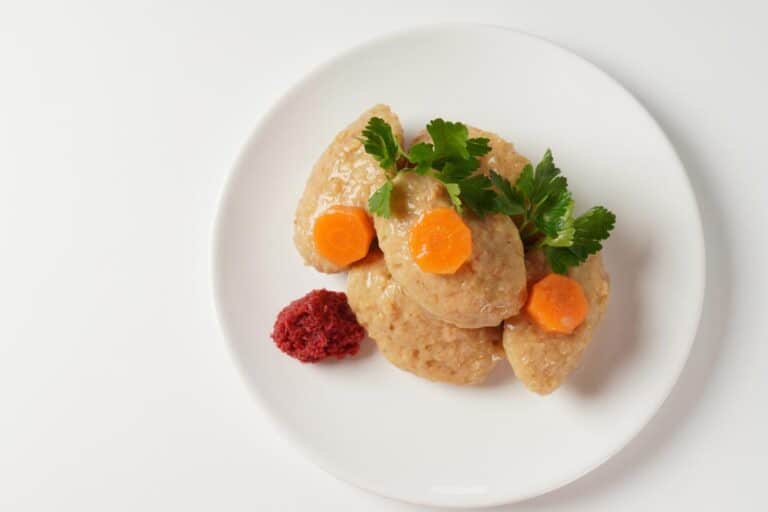
And people loved the taste of shmaltz – a shmear on bread or matzah, a tablespoon in the pan to start the cooking. We, who monitor our weight and heart health, have almost forgotten what it is. But I have a throwback nostalgia for it. I’m convinced that no other fat gives matzah balls that old-fashioned taste. So at Passover time, I take the fat off two chickens and render it down with onions. The yield is usually just enough for one batch of matzah balls.
The rest of the year, if I get a yearning for matzah balls, I use olive oil – but the taste isn’t the same.

There’s hardly a recipe. Take the raw fat and fatty skin off two or three chickens, or shnorr some off your butcher. Put it in a pan and cover it with cold water. Cook it over a medium flame till all the water has evaporated, and the skin is golden. Then chop an onion and add it to the pot. When you hear crackling and the skin and onion are dark brown, the shmaltz is ready.

Strain it, setting the chicken cracklings aside – the Yiddish name for them is gribbenis. (You can stuff matzah balls with them or add them to a kugel. Or just salt them and eat them as a guilty treat.)
Now, make your matzah balls.
Here’s the typewritten matzah ball recipe my Dad gave me, lo these many years ago: I think he took it from Jewish Cookery, adding his banana bread recipe at the bottom (the bread is obviously not kosher for Passover). It has his characteristic humorous tone. I depart a little from the recipe by adding 1/2 teaspoon freshly grated ginger.

Old-Fashioned Matzah Balls
Ingredients:
2 eggs, beaten
4 tablespoons shmaltz or other fat
1 scant cup matzah meal
1/4 – 1/2 cup water
1 teaspoon salt
1/2 teaspoon freshly grated ginger (optional)
Method:
1. Combine the beaten eggs, shmaltz, and matzah meal.
2. Add 1/4 cup water, salt, and ginger.If the mix seems stiff enough to roll into a hard ball, add more water by tablespoons till it’s a stiff batter, not a firm dough.
3. Cover the batter and put it in the fridge for 2 hours. This step is important if you want light matzah balls. The batter can rest in the fridge even longer – even overnight. It will become a dough firm enough to shape, but still a little loose in the hand.
4. Have a medium pot with plenty of boiling, lightly salted water ready. With wet hands, form walnut-sized balls of dough, and drop them in.
5. Cover and cook the matzah balls over a medium flame for 30 minutes. Lower the heat so that the water simmers after the initial boil – you don’t want the boil to destroy your little treasures.
6. Remove the matzah balls from the water and either set them aside for later or put them in your soup right away.
As Dad noted, they can be cooked directly in the soup, but don’t come out as light that way.
Nice to cook something exactly the way our ancestors did it two centuries ago. Who knows, maybe even longer?