May 132013
 

Shavuot whipped cheese mousse

Rich, yet light, with just the right touch of fruit to make a festive Shavuot dessert.

Even after a rich dairy meal, the gang wants a dairy dessert. And who am I to say nay? I’m a sucker for anything white and creamy, myself. Like the apricot swirl cheesecake I concocted a couple of years ago.

Continue reading »

Apr 132013
 

DSC_0154

I took a springtime walk through the Ramleh open-air market early last week. The sign wishing visitors a happy Passover was still up at the entrance.  You can find seasonal vegetables there which don’t appear in my local market: green chickpeas, purple carrots, Jerusalem sage… I like to roam around there and see what I can find.

image green garlic ramleh market

I mentioned last year that I’ll probably be posting about fresh green garlic every year, as long as I’m writing this blog. Well, it’s time.

And tell me, isn’t there something evocative about a bunch of purple-skinned fresh garlic? I confess, I feel the same esthetic satisfaction from one that contemplating a still-life of fruit by Monet gives me.

Continue reading »

Mar 242013
 

image spicy moroccan fish balls

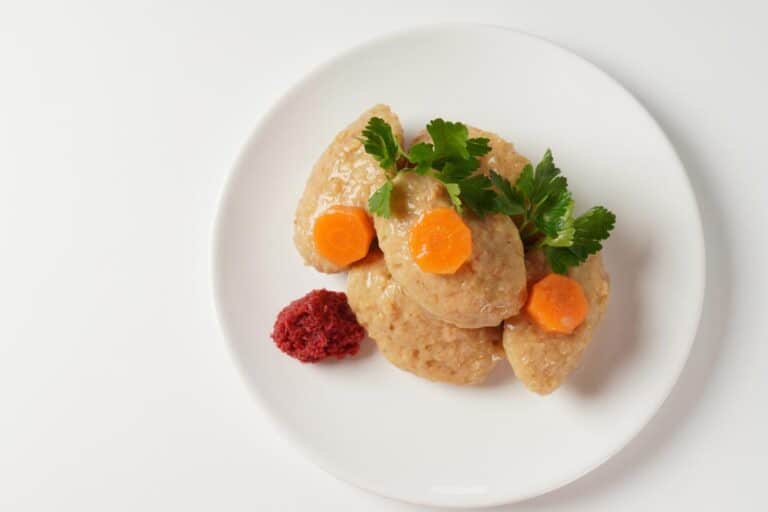
I kind of want to call this Sephardic gefilte fish.

Looking for a Passover  fish recipe and a little bored with my usual ones, I was glad to find this  in last December’s Al HaShulchan magazine. I modified it to include somewhat less chili.  The tender, juicy morsels are cooked in a soupy sauce, sort of like gefilte fish, but Eastern Europe never knew the olive oil, garlic and chili that give this dish its huge flavor kick. Not to mention plenty of cilantro – you’ll need a bunch and a half.

And it’s entirely kosher for Passover. The Little One liked it so much, she asked me to cook it for the Seder. Happy to oblige, darlin’ daughter.

In the meantime, let me wish you a happy and a kosher Passover, reader. This year in Jerusalem!

Continue reading »

Mar 092013
 

image eggplant stuffed with lamb

Succulent lamb on a bed of tender eggplant, generously spiced and sprinkled with pine nuts.

I served this aromatic, meaty dish with white rice on the side, just something rather plain, so as not to clash with the big, Middle Eastern flavors. With a leafy salad of mixed greens, we had a feast. And I’m thinking it would work really well on Passover week, when guests come from out of town and I’ll want to make something special.

It is a dish apart. I felt lucky to have discovered it in a new cookbook, Yotam Ottolenghi and Sami Tamimi’s  Jerusalem, A Cookbook. I hadn’t tried any of the recipes yet, just flipped through the pages, admiring the gorgeous photographs.

Then I remembered. In the fridge was lurking this enormous eggplant.

Continue reading »

Mar 012013
 

plain beans with shmaltz

Got a bagga beans?

In my mixed-heritage kitchen (Sephardic/Ashkenazic/Latin/Israeli/American – did I leave anyone out?) – well, in my kitchen, beans are cooked with plenty of herbs and spices. Black beans, white beans, red beans, all kinds of beans. But a recipe that my friend Varda Eptstein recently gave me captured my imagination: beans, plain and simple.

Well, it’s a bit more subtle than it sounds. The recipe involves shmaltz. The staple fat in Ashkenazi homes for centuries, shmaltz fell out of favor when vegetable oils became more easily available. Vegetable oils, you buy and pour out of a bottle. No worries about cholesterol if it’s good olive oil. Shmaltz, you have to render, flavor with onions, strain…more work.

But how sweet it is. There’s no flavor to beat that of shmaltz. The days are gone when busy mothers would hand their little ones slices of bread spread with a glistening layer of it, but we moderns still enjoy a light flavoring of shmaltz in many dishes. Just use it in moderation.

All the natural meatiness of beans comes out in this dish, making them savory in a heimisch – homely – way. I had a bag of frozen kidney beans that needed using up before Passover, so that’s what I cooked, and they turned out very well. The whole thing took about 10 minutes from start to finish. I’m going to serve these beans on Shabbat, resisting the temptation to add them to a  cholent or anything else.

Just beans, pure and simple. Really good.

Thank you, Varda!

(My notes follow after)

********************************************************

Plain Beans from Varda Epstein

Yes, I’m a foodie. But I’m not interested in trying new and unusual recipes. I like plain food that is true to its earliest ancestor.

But since I’m of Ashkenazi Jewish heritage and enjoy family research, I have melded these two interests in the form of recreating authentic Ashkenazi recipes. This is the kind of food that weighs you down and makes you groan. But hey! We only live once. I definitely don’t want to have lived without enjoying my favorite foods.

Here’s an example of a simple recipe my mother once described to me. Lithuanian Jews don’t generally use much sugar in their cuisine, so this recipe is kind of an anomaly. Still, you can see why this recipe was popular for the plainness of its ingredients, for its simplicity and for its cost effectiveness. It’s also a stick-to-the ribs kind of dish and probably kept a lot of Litvaks warm in those dreadful Eastern European winters.

 When I finally reveal the ingredients, you are going to have a bit of a shock and may doubt that this is a dish worth trying, but I have to say it’s absolutely scrumptious.

Ready?

 The ingredients are:

  Dried lima beans–cooked until slightly mushy

 Chicken fat (schmaltz

 Salt, pepper, and a bit of sugar.

 That’s all. It’s unctuous. It’s sublime. You will have to try it to find out. Believe me, this is authentic, plain food at its absolute best. I dare you to try it. You’ll swoon with pleasure.

My measurement notes:

  • 3 cups of frozen kidney beans, cooked 8 minutes in plenty of boiling water, then drained.
  • 1 tablespoon shmaltz
  • 1 teaspoon granulated sugar
  • salt and pepper to taste.
  • Mix gently and serve hot.

Varda Epstein is mother to 12 children,  food blogger for The Times of Israel, and communications writer at Kars4Kids.

Feb 202013
 

hamentaschen"

It’s going to be really close to Purim by the time I bake my old-fashioned hamentaschen. Time will run out on me before I photograph them – but in any case, I bake the same recipe every year, only varying the fillings as the fancy takes me.

So this year’s Purim recipe post invites you to choose one of many good ones that other Jewish bloggers have written up. Here’s a roundup of the Best of the Web’s three-cornered Purim morsels.

Joan Nathan’s Ultimate Hamentaschen (includes a cool video)

Guava and Cheese Hamentaschen from the Cuban Reuben

Guava and Cheese Hamentaschen

Apricot Hamentaschen from the Montreal Gazette

montreal gazette

Pear and Goat Cheese Hamentaschen from The Joy of Kosher

Classic, uncomplicated Hamentaschen from me-ander

6 Hamentaschen and Filling Recipes from Norene Gilletz

And finally, the recipe I use year after year: cookie dough Hamentaschen.

I really love how you can shlep good Jewish recipes from the cosmos these days, posted by an international cast of bloggers. Well, what’s the Internet for? Purim Sameach! And enjoy!


Feb 072013
 

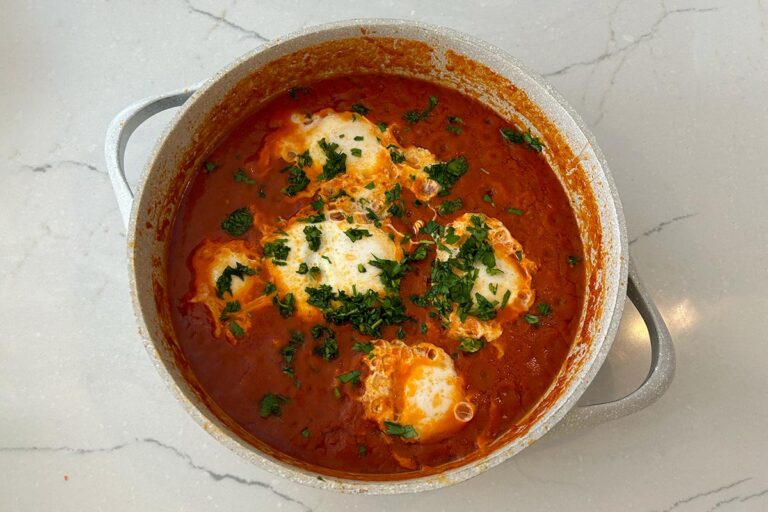
image shakshouka eggs recipe

I knew it as huevos rancheros, growing up. But since living in Israel, I call it shakshoukah, the name everybody knows for this well-loved, homely dish.

Sometimes you just need eggs for breakfast. I was hungry for eggs and vegetables and a tomato sauce. Sound logical? Well, this is Israel after all, where nobody raises an eyebrow at sturdy dishes that scream “Flavor!” at breakfast. My first shakshoukah recipe was based on some tomato sauce I had in the fridge. This shakshoukah one is more traditional, with the aroma of cumin topping tomatoes and bell peppers. And chili.

Continue reading »

Jan 312013
 

koshger wine festival jerusalem
The new kosher wine market expands as kosher-keepers discover and taste.

On one occasion I heard a secular winemaker complain how hard it is to maintain a kashrut certificate. Not because of the expense involved but because he isn’t allowed to  be with his fermenting wine. Having known the passion myself, I understand. A winemaker wants to nurse the wine along with his or her own hand.

But it’s encouraging, for a kosher-keeper like myself, to see how many good wineries have gone kosher in the past few years. And it’s amusing to watch the religious crowd, some of them black-hatted and all, opening up to the wonderful possibilities of fine wine.

Continue reading »

 Posted by at 8:21 PM
Jan 252013
 

image fresh pomegranate-tu-b'shvat
Happy Tu B’Shvat!

The Jewish new year for the trees falls this coming Shabbat, Friday the 25th of January, after nightfall.

If you’re plannng to conduct a Tu B’Shvat seder, here’s  a list of haggadot you can download.

And recipes with the Biblical seven species that grow in Israel, for your seder – enjoy!

Vegetarian/Vegan:

Eggplant Stuffed With Burgul and Dried Fruit

Spiced Olives and Potatoes With Olives

Poultry:

Turkey Breast Stuffed With Fruit and Nuts

Roasted, Fruited Chicken

Breads

Sourdough Walnut Herb Bread

Basil Bread

Sourdough Onion Bread


Sweets:

Baba BeTamur – Iraqui Pastries Stuffed With Dates or Almonds

Chocolate Fruit/Nut Clusters

Jan 222013
 

applesauce crumb cake recipe

It’s a quick and easy cake with a homely face. But it’s more sophisticated than it appears, being moist with applesauce, yet crunchy on top, and perfumed with lemon.

Pretty good cake for about 10 minute’s work. Hopefully autumn’s apples inspired you to make  home-made applesauce.  Which of course went into my applesauce oatmeal muffins. But, and let’s be realistic here, canned applesauce works fine.

A neighbor taught me this recipe long ago, when we were both still young mothers. I was in the middle of a domestic emergency in my Jerusalem apartment.

Continue reading »

Related Posts with Thumbnails